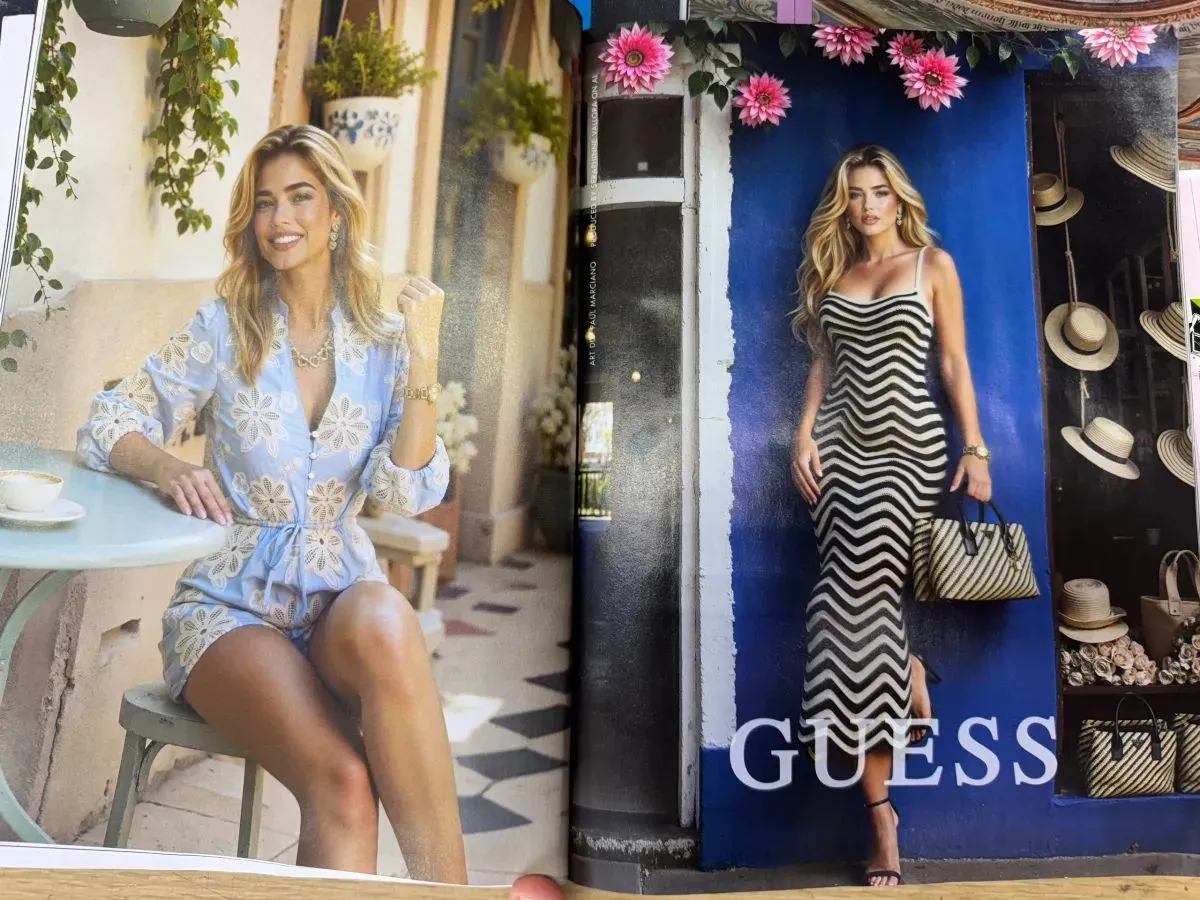
Guess's AI model and the cost of synthetic advertising
Originally posted on LinkedIn, August 21, 2025.
At first glance, it looked like another glossy Guess ad. A red dress, precise lighting, and a stunning model. What the ad did not say was that she does not exist.
Vogue ran the Guess ad featuring "Aitana," a model created entirely with AI. There was no disclosure and no hint that the person in the image was synthetic. The eye accepts what it sees, the mind fills in the rest, and trust starts to break down.
Designers, photographers, and models criticized the decision to replace a human subject with a synthetic avatar. Others asked whether it amounted to misleading consumers. Some saw the start of a quiet shift in which people gradually disappear from the frame and only the technology remains.
There is also a harder moral question about self-image. AI can now fool us with flawless people who do not exist in reality.
Guess presented the ad as innovation. In practice, it removes more than it adds. The company did not use AI to improve an image, but to save money. It did not use it to imagine a future, but to manufacture an illusion.
What concerns me is not the use of the technology. It is the disguise. When a global brand uses AI this convincingly without telling people, it does more than cross a line. It changes the rules.
This debate may have started in fashion, but it applies anywhere appearance replaces reality. Artificial representations are becoming normal whether we choose that shift or not, and they will affect how we see ourselves and each other.