AI ministers and democracy by Discord
Originally posted on LinkedIn, September 13, 2025.
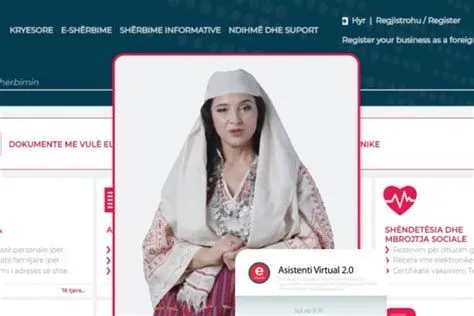
Albania has appointed a new government minister. She is an AI system called Diella, and she is supposed to do something no government minister has truly managed: eliminate corruption.
Her job is to oversee every public tender in the country, identify irregularities, track bias, and flag conflicts of interest. Prime Minister Edi Rama presented her as “a revolution in government transparency” and promised that every public tender would go through the algorithm.
It is a bold step, and perhaps an obvious one. If institutions cannot clean themselves up, maybe a machine can do it for them. No bribes, no pressure, no favors. An algorithm with parameters instead of interests.
But this experiment raises questions that cannot be ignored about democratic government when computer code becomes the decision-maker:
- Can technological transparency replace political accountability?
- Can moral authority be delegated to a system written by a small group of programmers?
- What happens when the public does not understand the reasoning behind its decisions? Not that this is new to us.
Governments may soon do more than adopt AI systems. They may have to justify themselves to those systems, or hide behind them.
Diella may not take a bribe, but the person who wrote her still can.
This does not end in Albania. Two weeks ago, Nepal’s government blocked Facebook, Instagram, and YouTube. Within days, tens of thousands of young people, mostly Gen Z, took to the streets. Dozens were killed.
The stated demand was freedom of speech. Behind it was a deeper anger: alienation from state institutions, chronic corruption, economic inequality, and above all, an entire generation that does not see itself represented by the system.
The organizers did not come from political parties and were not elected. Most decisions were made through discussions on Discord. One proposal was to choose a temporary representative who would approach the government, speaking not for a party but for an idea.
This was more than a political protest. It was a digital vote against representative democracy as we know it, not because it is undemocratic, but because it is slow, closed, and feels irrelevant.
Even if the effort fails, some of the biggest questions about the future of government have suddenly started being asked in Kathmandu.